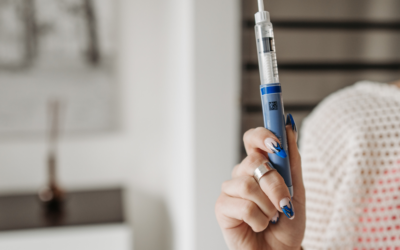


You've likely heard all the buzz about these GLP-1 drugs — Ozempic, Wegovy, Zepbound — and how people are losing weight in dramatic ways. But what's really going on in your body when you take one of these medications? Here's a clear, jargon-free explanation of exactly how they work.
What Is GLP-1? Understanding the Natural Hormone
GLP-1 stands for Glucagon-Like Peptide 1 — a natural hormone your body already produces on its own. It's made in the cells of your gut (called L-cells) immediately after you eat a meal.
Once released, GLP-1 instructs your pancreas to release insulin, tells your brain you're full, slows stomach emptying, and prevents blood sugar from spiking. Think of it as the traffic manager for your food intake and energy levels — controlling the fuel going in, the rate it moves through your system, and when to slow down.
The drawback? Natural GLP-1 is destroyed within one to two minutes. The appetite suppression it causes is too brief to make any meaningful difference in how much you eat. This is exactly where GLP-1 medications come in.
What Do GLP-1 Medications Actually Do to Your Body?
Medications like semaglutide (Wegovy, Ozempic) and tirzepatide (Zepbound, Mounjaro) are designed to mimic your body's natural GLP-1 hormone — but in a much stronger, longer-lasting way.
Whereas your natural GLP-1 lasts one to two minutes, semaglutide remains active in your system for a full week. Where your natural hormone sends a weak, fleeting "you're full" signal, a GLP-1 receptor agonist sends a strong, around-the-clock message — days at a time.
The result is a completely new relationship with hunger, food, and appetite. Here's exactly what happens, step by step.
5 Ways GLP-1 Medications Trigger Weight Loss
Your Brain Receives a Powerful “Stop Eating” Signal
GLP-1 medications directly affect the hypothalamus and brain stem — the areas that control hunger. When GLP-1 receptors in these regions are stimulated, the brain gets a loud, clear message: "You've had enough." This reduces appetite and makes it easier to eat smaller portions without feeling deprived. For people with obesity, whose normal hunger control centers work against them, GLP-1 medications help restore the balance.
The Brain’s Food Reward System Gets Dialed Down
GLP-1 receptors exist in the brain's mesolimbic reward system — including the ventral tegmental area and nucleus accumbens. Activating these receptors decreases dopamine release, which reduces the pleasurable feelings typically linked to highly palatable foods. That irresistible craving for pizza, chips, or ice cream? It no longer has quite such a strong grip on you. This is also why so many people report a dramatic decrease in "food noise" — the constant mental chatter about what to eat or snack on. It quiets down significantly.
Your Stomach Slows Down Digestion
GLP-1 medications slow down how fast food moves from your stomach into your small intestine. When food stays in your stomach longer, you feel full for a longer time after each meal. This naturally leads to eating less at each sitting — and slowing digestion also prevents sudden blood sugar spikes. Note: this slowing is also the main reason some people experience nausea as a side effect while their digestive system adjusts.
Insulin and Blood Sugar Get Regulated Intelligently
GLP-1 receptor agonists stimulate insulin production in proportion to food consumed, and reduce glucagon — the hormone that raises blood sugar. Crucially, this is glucose-dependent, meaning insulin is only produced when blood sugar is actually high. This eliminates the risk of dangerous blood sugar lows common with other diabetes medications. For weight loss, stable blood sugar means no energy crashes — and none of the hunger pangs that come with them.
Other Hunger Hormones Join In
GLP-1 medications don't act in isolation. Studies indicate they also reduce ghrelin (the primary hunger hormone) while simultaneously stimulating appetite-suppressing hormones like peptide YY and cholecystokinin. This is a key reason why GLP-1 medications work so effectively — they act on the entire system of hunger hormones at once, not just a single pathway.
GLP-1 Weight Loss Mechanisms at a Glance
| Mechanism | Where It Happens | Effect on Weight |
|---|---|---|
| Appetite suppression | Brain (hypothalamus, brainstem) | Eat less overall |
| Reward system blunting | Brain (dopamine pathways) | Reduces cravings for high-calorie foods |
| Slowed gastric emptying | Stomach | Feel full longer after meals |
| Blood sugar stabilization | Pancreas, liver | Fewer hunger spikes and energy crashes |
| Ghrelin reduction | Gut hormones | Lower baseline hunger levels |
| Enhanced satiety signals | Gut (peptide YY, cholecystokinin) | Faster and stronger fullness cues |
What Makes Tirzepatide (Zepbound) Different from Other GLP-1 Drugs?
If GLP-1 drugs are effective, tirzepatide takes this a step further. Unlike semaglutide, which acts only on GLP-1 receptors, tirzepatide acts on two receptors: GLP-1 and GIP (glucose-dependent insulinotropic polypeptide).
GLP-1 and GIP receptors are found in the brain, fat cells, pancreas, and other metabolically active areas. Activating both receptors simultaneously produces a more potent effect on improving insulin levels, fat metabolism, and appetite reduction — which is why clinical results for tirzepatide consistently show higher weight loss than semaglutide.
Benefits of GLP-1 Medications Beyond Weight Loss
One of the most exciting aspects of GLP-1 research is the discovery of health benefits that go well beyond the scale.
For those eligible for GLP-1 treatment — especially those with pre-existing heart disease, type 2 diabetes, or metabolic syndrome — these additional benefits strengthen the case for treatment significantly.
An Important Caveat: Muscle Loss During GLP-1 Treatment
The weight loss from GLP-1 medications is not entirely fat. Rapid weight loss can cause 15 to 25 percent of the total weight lost to come from lean muscle mass. This is why experts strongly emphasize the importance of adequate protein intake and resistance training while using these medications. Muscle mass doesn't maintain itself automatically during weight loss — it requires deliberate effort.
Why Do People Regain Weight After Stopping GLP-1 Medications?
This is one of the most common questions, and the answer only underscores how powerfully these drugs work.
GLP-1 medications work by keeping GLP-1 receptors activated at an elevated level. When the medication stops, this elevated signal ceases. The brain's appetite centers revert to baseline. Hunger hormones normalize. Food cravings return. The brain's reward response to high-calorie foods goes back to what it was before.
Studies show that most people regain a large proportion of lost weight within 12 months of stopping these medications. This is not a matter of willpower — it is a matter of biology. The medication was managing a chronic condition, and without it, the condition reasserts itself.
This is why most medical experts today consider obesity a chronic disease requiring long-term management — not an acute condition that can be treated and forgotten.
The Future of GLP-1 Science: What’s Coming Next?
Researchers have already begun testing triple-agonist medications like retatrutide, which simultaneously targets GLP-1, GIP, and glucagon receptors. Early results suggest patients could lose up to 30 percent of total body weight — a figure that was considered impossible just five years ago.
One active area of investigation is whether long-term use could lead to diminished response over time, as receptors may become tolerant to constant stimulation. However, tolerance has not been observed in patients taking these medications so far. The science of GLP-1 medications is still in its relative infancy — and every year, new discoveries expand what we understand about their potential.
Frequently Asked Questions About GLP-1 Medications
How exactly does GLP-1 cause weight loss?
GLP-1 medications work through multiple pathways simultaneously: they reduce appetite by influencing brain areas where hunger is regulated, prolong digestion so you stay full longer, reduce cravings by desensitizing the brain's food reward areas, and keep blood sugar levels stable to eliminate hunger pangs. The result is that it becomes much easier to eat less without constantly fighting cravings and hunger.
Is GLP-1 weight loss just about eating less, or does it do more?
It's not just about eating less — although that in itself is significant. GLP-1 medications help the body use insulin and glucose more effectively, reduce inflammation in fat tissue, lower the risk of heart problems, and positively affect the gut microbiome. The weight loss itself also produces beneficial secondary effects on blood pressure, cholesterol levels, sleep apnea, and joint pain.
Why do some people respond better to GLP-1 medications than others?
Individual responses can differ based on genetics, specific drug and dosage, diet and exercise habits, gut microbiota, and prior medical conditions. Some people simply have a more sensitive response to GLP-1 receptor stimulation. Doctors can try adjusting dosage or switching medications to improve initial results.
Does GLP-1 burn fat directly?
Not directly. The primary mechanism is decreasing the amount of food consumed. The resulting caloric deficit forces the body to draw on stored fat reserves for energy. GLP-1 medications are not fat-burning drugs — they alter the signals that control how much you eat, and the body does the rest.
Can your body get used to GLP-1 medications over time?
This is an active area of investigation. So far, there have been no clear indications of tolerance in patients taking GLP-1 medications — patients have continued losing weight over time. However, scientists are closely monitoring whether long-term adaptations in receptor sites could eventually occur.
How is tirzepatide different from semaglutide in how it works?
Semaglutide activates only the GLP-1 receptor, while tirzepatide activates both the GLP-1 and GIP receptors. GIP receptor activation further increases fat metabolism, insulin secretion, and appetite suppression. This dual action explains why tirzepatide consistently shows higher weight loss results — approximately 20 percent on average — compared to semaglutide's approximately 15 percent average.