
If you have used GLP-1 medication for some time now and are finding your showers draining more hair than normal, there’s nothing wrong with you – and certainly, you’re not alone. Among the many side effects that patients using GLP-1s such as Ozempic, Wegovy, and Zepbound report is the issue of hair loss, which is the most discussed topic in online communities related to weight loss. Is it true, however, that hair loss is caused by GLP-1 medication? Is there an alternative reason? The truth, as with anything medical, is always more complicated than just being a yes or no. In the following paragraphs is a straightforward discussion of the reality behind this side effect of GLP-1 medication. For more factual information regarding GLP-1s, visit glpweightloss.online.
Does GLP-1 Cause Hair Loss?
It is acknowledged that hair loss is a genuine adverse reaction caused by GLP-1 drugs. This fact was admitted by Novo Nordisk, which manufactures the medications Wegovy and Ozempic. During the clinical trial of Wegovy, hair loss was reported by 2.5% of patients who were taking this drug and 1.0% of patients who were in the control group. Alopecia is mentioned in the post-marketing experience part of the prescribing information for Ozempic and Rybelsus. There are some other pharmacovigilance studies involving FAERS data that identified an important clinical signal. According to the results, the reporting odds ratios (RORs) for alopecia related to the use of semaglutide and tirzepatide are 2.46 and 1.73, respectively. In turn, a real-world, multicenter cohort study performed in 2025 confirmed the connection between GLP-1 agonists and hair loss through examining data on more than 100 million individuals. In summary, it should be stated that hair loss is a genuine side effect of GLP-1 therapy. Still, there is one critical point that needs to be discussed. Hair loss associated with the mentioned drug is the result of general effects on the whole body and rapid weight loss that can accompany this medication.
The Main Culprit – Telogen Effluvium
Among patients who are on GLP-1 medications, telogen effluvium is the most common type of hair loss. Once you understand what happens during telogen effluvium, then everything becomes clear. Hair growth occurs in a series of three cycles that are known as anagen (growth phase), catagen (transitional phase), and telogen (resting phase). The hair will fall off after the resting phase, and the cycle will repeat itself. Normally, 10% to 15% of the hair follicles are in the resting phase.
During telogen effluvium, there is an increased number of hair follicles in the resting phase due to certain triggers. Then the hair falls off several months later. Some things that can lead to telogen effluvium include childbirth, surgeries, serious diseases, emotional stress, hormonal changes, dieting, and losing weight. However, if people manage to lose 15%-20% of body weight based on taking GLP-1 agonists, which is the exact purpose of this drug, it can be considered by the body as a kind of stress response. In the end, the reaction of hair to the stress will be evident several months later. The point here is that scientific data obtained from clinical trials of Wegovy proves the correctness of this approach because there were cases when hair was shed by 5.3% of people who managed to reduce 20% or more of their body weight, and only 2.5% of those who reduced less than 20% of body weight.
When Does GLP-1 Hair Loss Typically Appear?
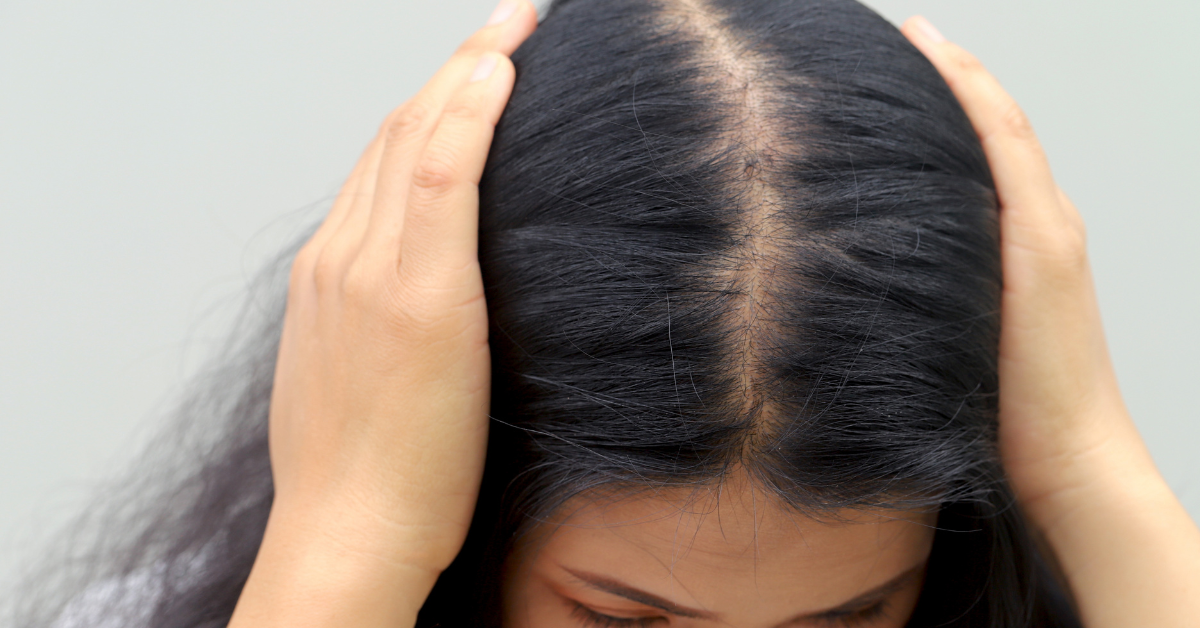
In most cases, patients experience this hair loss side effect of GLP-1 three to six months after starting the medication. This timeline aligns very well with how telogen effluvium develops since it starts weeks or months after exposure to the initial cause and not immediately. However, this delay in experiencing the side effect can also make it harder for patients to associate it with their GLP-1 treatment. The patients have been using the medication for months without any problems, and then all of a sudden, they experience hair loss. Hair loss associated with telogen effluvium appears as thinning hair spread uniformly over the entire head. It does not appear as bald spots, unlike other forms of hair loss.
What Are the Potential Mechanisms?
While rapid weight loss is the leading explanation, researchers have proposed several additional mechanisms that may contribute. The picture is still evolving.
Nutritional deficiencies from appetite suppression
GLP-1 drugs have been found to reduce appetite and food consumption considerably. In the case of significant reductions in the intake of calories and other nutrients, such as micronutrients including iron, zinc, biotin, and vitamin D, malnutrition might be caused. Such a cause of hair fall due to malnutrition is well-known, and its connection to GLP-1 has been specifically highlighted in a 2025 paper published in the Journal of Cosmetic Dermatology.
Direct follicular effects
While there have been findings about the presence of GLP-1 receptors in mouse hair follicles, which makes the potential for such a mechanism of hair growth cycles possible, human data regarding this is still not available.
Hormonal and metabolic changes
Changes in the hormones’ composition, such as insulin, insulin growth factor, and androgens, caused by fast weight loss, may influence the hair cycle. It has been suggested that those hormone changes could increase the rate of androgenic alopecia in patients who are genetically vulnerable to this disease.
Psychosocial and physical stress
Obesity management, adjusting to lifestyle changes, and experiencing adverse effects, such as nausea, are all stress factors capable of causing telogen effluvium on their own.
Who Is Most Likely to Experience Hair Loss on GLP-1s?
But not all users are affected by hair loss caused by GLP-1 drugs, and knowledge about the risk factors could help manage expectations. For one thing, rapid and significant weight loss increases the chances of hair falling out. This fact is evident from the clinical trial results, where hair loss was twice as frequent among people who experienced at least 20% loss of body weight. Also, individuals who suffer from hair loss conditions before taking GLP-1 medications, especially androgenetic alopecia, might be more prone to side effects related to hair health. Another factor that increases the risk of hair loss when using GLP-1 medications is an inadequate diet, which implies insufficient intake of nutrients and the overall caloric value of consumed food. The positive aspect of hair loss as a potential side effect of using GLP-1 drugs is its reversibility. For many people, the hair growth period after a few months following the onset usually improves, with full recovery achieved within 6 to 12 months.
Can GLP-1 Medications Actually Help With Some Types of Hair Loss?
Here is where the science gets exciting. Whereas one literature mentions alopecia as an adverse effect, there is evidence from another body of work indicating that the use of GLP-1 medications could be beneficial to patients suffering from specific alopecia forms, especially when there is an underlying metabolic and inflammatory cause behind the alopecia. There have been several instances of significant regrowth in patients with folliculitis decalvans and CCCA after beginning treatment with tirzepatide. One article in the Journal of the American Academy of Dermatology in 2025 explored these findings and pointed out how the benefits in terms of insulin sensitivity and metabolism created by GLP-1 drugs could lead to an environment suitable for hair growth in some cases. Current scientific knowledge: GLP-1 medications seem to increase the risk of telogen effluvium hair loss through fast weight loss while improving the alopecia associated with inflammatory or metabolic causes. This is an opposing effect due to separate mechanisms in separate populations.
What Can You Do to Prevent or Minimize Hair Loss on GLP-1s?
The most important thing to understand is that protecting your hair while on GLP-1 medications is largely within your control – through nutrition and lifestyle choices.
Prioritize adequate protein intake
Protein is the base component in making hair. When on GLP-1 drugs, the suppression of appetite can cause a lack of adequate protein intake, often without awareness. The target amount of protein should be 1.2 – 1.6 grams per kg body weight daily. Some foods high in protein include eggs, fish, Greek yogurt, beans, and lean meat.
Don’t let micronutrients slip
Iron, zinc, biotin, and Vitamin D deficiency may lead to hair fall and become more likely when calorie intake is severely reduced. You should consult with your physician if you are undergoing regular testing for these nutrients and if you require taking any supplements to cover the deficiencies.
Slow the weight loss pace if possible
Extremely fast weight loss has additional risks. In cases where you’re losing weight very quickly, consider talking with your physician about a titrated dose for better outcomes and lower chances of experiencing hair fall.
Talk to a dermatologist
Should you have an extensive amount of hair fall, a dermatologist will be able to diagnose the kind of hair loss, eliminate other possible reasons for it, and recommend treatment solutions such as topical minoxidil and oral minoxidil, which are usually employed to help regenerate hair during and after telogen effluvium.
Stay the course
In most cases, hair loss due to GLP-1 is only temporary. Prematurely discontinuing GLP-1 use because of hair loss leads to missing out on the metabolic and weight loss benefits associated with the drug. The better way to tackle hair loss is to focus on nutrition deficiencies and let your body heal itself. To learn more about GLP-1 side effects and how to optimize its usage, visit glpweightloss.online.
Frequently Asked Questions
Does GLP-1 medication directly cause hair loss?
No, not really. The most frequent cause is telogen effluvium – an acute condition of shedding brought about by the stress of rapid and substantial weight loss. In this case, the drug causes weight loss, and weight loss triggers telogen effluvium. Poor nutrition caused by a reduced appetite is another reason. How GLP-1 drugs affect human hair has yet to be determined.
How common is hair loss on GLP-1 medications?
Hair loss occurred in 2.5 percent of the subjects in clinical studies of Wegovy – and in 5.3 percent of those who experienced weight loss of 20 percent or more. According to pharmacovigilance analysis, the percentage of patients suffering from this adverse effect could be slightly higher in reality, but even so, it is less common than digestive problems, such as nausea and constipation.
When does GLP-1 hair loss start, and how long does it last?
The hair loss tends to begin 3-6 months after the administration of the treatment, as with the case with telogen effluvium. It tends to reach a peak and then improve gradually. Hair regrowth takes 6-12 months from the beginning of hair shedding.
Is GLP-1 hair loss permanent?
No, in the great majority of instances. The type of GLP-1-induced hair loss, the telogen effluvium, is both temporary and reversible. The follicles remain healthy – they just were pushed prematurely into a resting state and eventually go back to growing actively again. The main prerequisites for regrowth include proper nutrition and enough time.
What can I do to prevent hair loss on GLP-1 medications?
The most scientifically substantiated methods include ensuring proper protein intake (at least 1.2-1.6 g per kg of weight per day), watching your iron, zinc, vitamin D, and biotin blood levels, avoiding fast weight loss, if possible, talking with your physician about a gradual titration of the drug, and visiting a dermatologist in case of noticeable hair loss.
Should I stop taking my GLP-1 medication because of hair loss?
No, in most instances. GLP-1 drugs offer a great deal of metabolic health benefits, which, in most cases, compensate for the hair shedding side effect. Hair loss is likely to continue despite discontinuation, and the weight loss and cardiometabolic improvements provided by the drug are lost as well.
Resources
https://www.ema.europa.eu/en/documents/product-information/wegovy-epar-product-information_en.pdf
https://www.tga.gov.au/sites/default/files/2024-09/auspar-wegovy-01-240904-pi.pdf
https://pubmed.ncbi.nlm.nih.gov/38925559/
https://pubmed.ncbi.nlm.nih.gov/39863171/
https://pmc.ncbi.nlm.nih.gov/articles/PMC11621640/
https://pubmed.ncbi.nlm.nih.gov/39623615/
https://onlinelibrary.wiley.com/doi/10.1111/ijd.70133?af=R
https://karger.com/sad/article/11/5/416/921780/Dermatologic-Implications-of-Glucagon-Like-Peptide
https://joinmochi.com/blogs/does-wegovy-cause-hair-loss
https://pubmed.ncbi.nlm.nih.gov/41707704/
https://www.healthline.com/health-news/glp-1-drugs-may-cause-hair-loss-treatment
https://pmc.ncbi.nlm.nih.gov/articles/PMC12431796/
https://www.sciencedirect.com/science/article/abs/pii/S0923181121000086
https://pmc.ncbi.nlm.nih.gov/articles/PMC12530271/
https://www.boltpharmacy.co.uk/guide/ozempic-and-hair-loss