

The last few years have been quite remarkable, especially when it comes to the way we approach the topic of weight loss and metabolic health. GLP-1 medications, for instance, have gone from unknown to one of the most talked-about treatments in the world of modern medicine.
As you might expect, one of the most frequently asked questions, especially when it comes to GLP-1, is this one:
“How many Americans are currently using GLP-1 medications?” The answer, however, reveals so much more about the world of health, science, and the fact that we’re finally starting to approach the topic of weight loss, metabolism, and overall health in the right way.
How Many Americans Are Currently on GLP-1 Medications?
As of 2026, GLP-1 drugs have reached unprecedented levels of use in the United States. Current estimates show that 30 to 40 million Americans have tried or are using GLP-1 drugs, and 12% of adults in the United States are actively using these drugs at any given time. This is a dramatic increase in the use of these drugs compared to just a few years ago.
This means that this number equates to approximately:
- 1 in every 20-25 Americans is currently using GLP-1 medications
- Millions of new prescriptions every year
- The numbers continue to rise exponentially
As it turns out, some surveys have also suggested that up to 9-12% of American adults have tried GLP-1, even if they aren’t currently using it.
This is one of the fastest adoption rates we’ve seen for any medication class in recent history.
What Exactly Are GLP-1 Medications?
GLP-1 medications are a category of prescription drugs that are engineered to replicate a natural hormone found within your body called glucagon-like peptide-1 (GLP-1). This hormone is released in your gut after you eat a meal and is a natural mechanism for controlling hunger, blood sugars, and digestion. The effect of GLP-1 medications is simply to “enhance” this natural process within your body to make you feel fuller sooner and longer, while also helping your body more efficiently manage your blood sugars.
In simple terms, GLP-1 medications work by slowing the rate at which food leaves your stomach, reducing your hunger cues in your brain, and enhancing your body’s natural release of insulin in response to food intake. This results in a reduced amount of calories being consumed without the constant feelings of deprivation that are often experienced when traditional dieting is attempted. This is why many patients comment on how they “finally feel in control of their eating.”
The primary use of GLP-1 was to manage type 2 diabetes since it has the effect of reducing blood sugar levels while at the same time being safe for the body. However, it was realized that patients who took the drugs also lost considerable amounts of weight. This was a major discovery that prompted further studies and ultimately the approval of the drugs for use by people who are obese or overweight and also have related conditions.
Today, the drugs are being widely used not only to manage diabetes but also to lose weight. They are a major advancement in weight loss management since they focus on the biology of weight gain rather than relying on one’s willpower to lose weight.
Common GLP-1 Medications
These include:
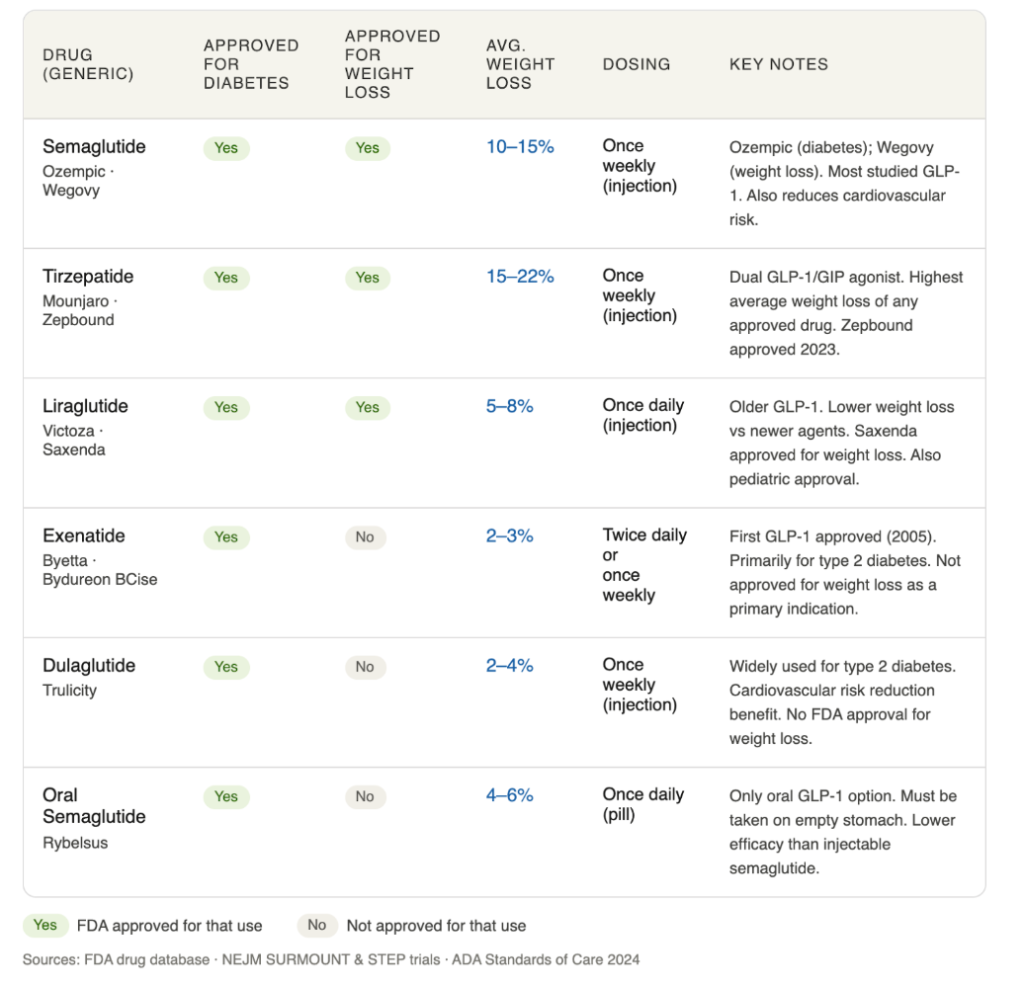
- Semaglutide (found in Ozempic and Wegovy)
- Tirzepatide (found in Mounjaro and Zepbound — technically a dual GLP-1/GIP medication)
- Liraglutide (Saxenda, Victoza)
Each of these works slightly differently, but the core goal is the same: help your body regulate hunger and metabolism more effectively.
Why Has GLP-1 Use Increased So Dramatically?
The rapid growth in GLP-1 usage didn’t happen by accident. Several key factors are driving this surge.
1. Strong Weight Loss Results
Clinical trials and real-world data consistently show:
- 10–15% body weight loss with semaglutide
- 15–22% weight loss with tirzepatide
For many patients, this is the first time they’ve experienced sustainable, medically significant weight loss.
2. High Prevalence of Obesity and Metabolic Disease
In the United States:
- Over 40% of adults have obesity
- Around 70% are overweight or obese
- Nearly 1 in 3 adults has prediabetes
- About 11% have type 2 diabetes
GLP-1 medications directly address the biological drivers behind these conditions, which makes them highly relevant for a large portion of the population.
3. Increased Awareness and Media Coverage
You’ve likely seen:
- Social media discussions
- Celebrity transformations
- News coverage about medications like Ozempic
While not all of the information online is accurate, it has significantly increased awareness.
4. Expanding Medical Benefits
Originally developed for diabetes, GLP-1 medications are now being used for:
- Weight management
- Cardiovascular risk reduction
- Improving metabolic health
Some studies even show reduced risk of:
- Heart attacks
- Stroke
- Kidney disease progression
Who Is Taking GLP-1 Medications?
One of the biggest misconceptions is that GLP-1 medications are only for a specific type of patient. In reality, the user base is quite diverse.
1. Patients with Type 2 Diabetes
These medications were first approved to:
- Lower blood sugar (A1C)
- Improve insulin function
- Reduce complications
2. Patients with Obesity (BMI ≥30)
Even without diabetes, many patients use GLP-1s for:
- Weight loss
- Improved energy levels
- Better overall health markers
3. Patients Who Are Overweight with Health Conditions
People with a BMI ≥27 may qualify if they also have:
- High blood pressure
- High cholesterol
- Sleep apnea
4. Patients with “Stubborn Weight” or Metabolic Resistance
Some individuals:
- Eat well
- Exercise regularly
- Still struggle with weight
GLP-1 medications can help correct underlying metabolic issues in these cases.
How Fast Is GLP-1 Usage Growing?
The growth has been nothing short of remarkable.
Key Trends:
- Prescriptions have increased by over 300% in the past 3–4 years
- Weekly prescriptions now reach hundreds of thousands
- New users are joining every month
This kind of growth is rare in medicine and reflects both:
- Strong patient demand
- Proven effectiveness
Are People Staying on GLP-1 Medications Long-Term?
This is a very important- and often overlooked- question.
Real-World Usage Patterns:
- Some patients stay on treatment for 6–12 months
- Others continue long-term for maintenance
- Some stop due to:
- Cost
- Side effects
- Reaching their goal weight
Studies suggest that a significant number of patients discontinue within the first year, but many:
- Restart later
- Switch to a different GLP-1
- Adjust dosing strategies
Long-term success often depends on:
- Proper medical guidance
- Lifestyle support
- Realistic expectations
What Does the Future Look Like?
The number of Americans using GLP-1 medications is expected to increase significantly in the coming years.
Why?
- New medications are being developed- Even more effective options are in the pipeline.
- Insurance coverage is slowly improving, although still a barrier, and more employers are beginning to include coverage.
- Broader medical applications are emerging- These medications are being studied for additional conditions.
- Social acceptance is increasing– People are becoming more open to medical support for weight loss.
Experts predict that usage could reach 20–30 million Americans within the next few years.
What the Numbers Don’t Tell You
Statistics are helpful, but they don’t capture the human experience.
Behind every number is someone who has:
- Struggled with weight for years
- Felt frustrated by failed diets
- Experienced judgment or stigma
One of the most powerful shifts happening right now is this:
We are finally recognizing that weight is not just about willpower—it’s about biology.
GLP-1 medications help address that biology in a meaningful way.
Frequently Asked Questions (FAQs)
Are GLP-1 medications only for people with diabetes?
No, not at all. While these drugs were originally intended for the management of type 2 diabetes, many of them have now become FDA-approved drugs for the management of weight. They can be safely used by those who do not have diabetes, especially those with obesity or obesity-related health problems. The objective here is not just the management of blood glucose levels, but the overall metabolic health of the individual.
Why are so many people starting GLP-1 medications now?
There are several reasons why this is happening. First, the results with these drugs are quite superior compared to the older weight loss management drugs. Second, there is now greater awareness, thanks to the media and the experiences of those using these drugs. Third, the newer drugs, such as semaglutide and tirzepatide, have shown remarkable results in clinical trials. These factors have now made GLP-1s quite attractive and acceptable.
Is it safe for millions of people to be on these medications?
Based on the current research, the GLP-1 drugs can now be said to be safe, especially for those who qualify, under the proper care of a healthcare provider. While these drugs, like any other drugs, have some potential side effects, which include nausea, stomach discomfort, and appetite loss, the long-term results have been quite favorable.
Will I need to take a GLP-1 medication forever?
Not necessarily. Some individuals choose to use these drugs for a period of time to reduce their weight, then stop using them. Others choose to be on the medication for an extended period to prevent the recurrence of their pre-medication weights. The choice will vary from one person to another, depending on their health goals, among other factors.
Are GLP-1 medications replacing diet and exercise?
No- and they aren’t intended to. These medications will be most effective if you also make healthy lifestyle choices, such as eating well, staying physically active, getting plenty of sleep, and managing stress. GLP-1s are like a tool to help you stick to your healthy lifestyle, but not instead of it.
Resources
https://www.cdc.gov/obesity/adult-obesity-facts/index.html
https://www.axios.com/2025/05/27/american-glp1-use-weight-loss-increasing
https://www.ncbi.nlm.nih.gov/books/NBK585056/
https://www.solvhealth.com/health/obesity-statistics
https://diabetes.org/about-diabetes/statistics/about-diabetes
https://www.clinicalnutritioncenter.com/obesity-medicine/wegovy-ozempic-semaglutide
https://www.cardiometabolichealth.org/article/zepbound-is-approved-by-fda-for-obesity/